
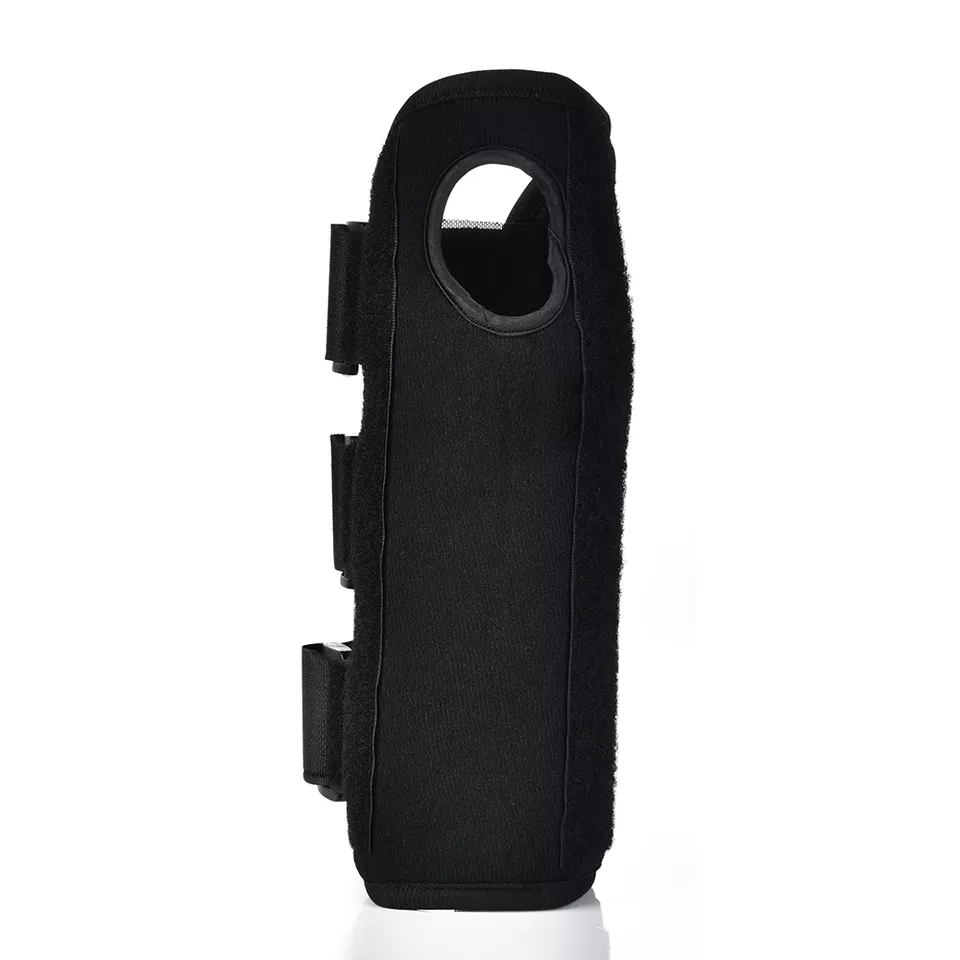
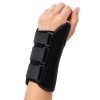
Carpal Tunnel Syndrome Wrist Splint Brace
£13.99inc VAT
- Firm wrist splint brace for adults with wrist and hand pain, tingling, or numbness
- Neutral‑position wrist brace for Carpal Tunnel Syndrome and other common wrist problems where a clinician advises support
- Holds the wrist straight to help reduce pressure on the median nerve in the carpal tunnel
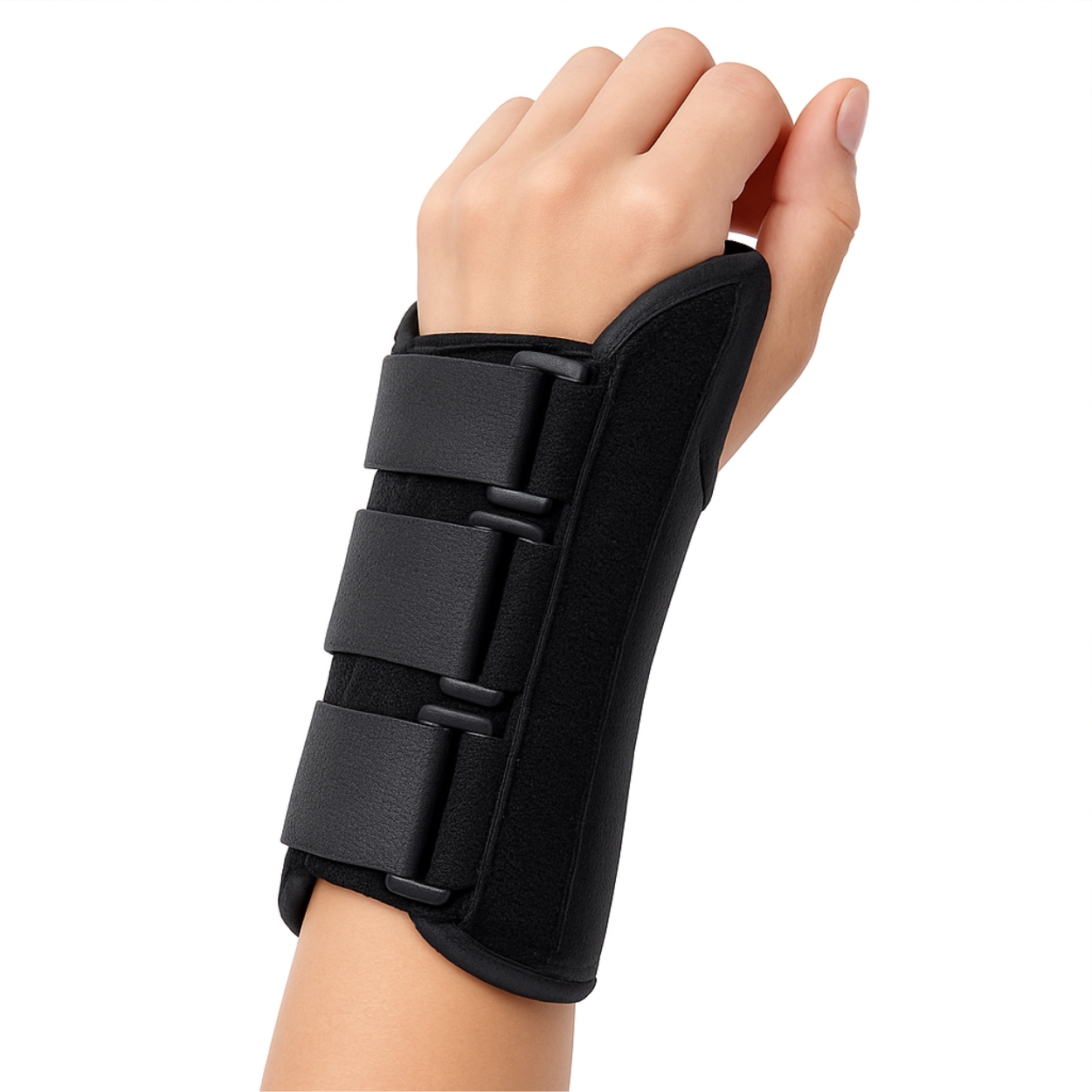
- Three built‑in aluminium strips stabilise the palm side and both sides of the wrist and forearm
- Limits bending and twisting at the wrist that can provoke pain, pins and needles, or weakness
- Carpal tunnel wrist splint commonly recommended for night‑time use to reduce waking with “dead” or tingling hands
- Can also be worn in the day during tasks that tend to bring your symptoms on, such as typing or other repetitive hand work
- Left‑ and right‑hand specific design in three sizes for a secure, anatomical fit around the wrist and hand
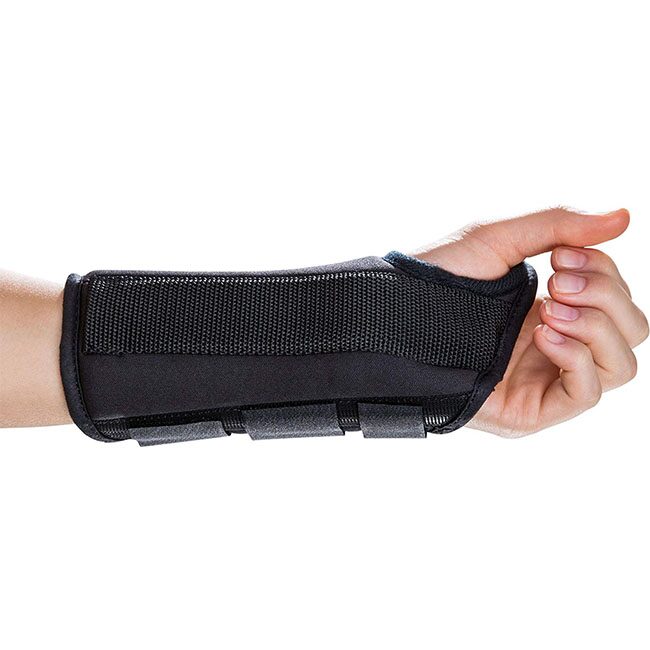
- Padded, breathable materials with soft edges for comfort during longer wear
- Leaves thumb and fingers free so you can still perform many light everyday tasks
- Supports the Protection, Rest, and Compression parts of the P.R.I.C.E. approach for sprains, strains, and other wrist injuries
- Often recommended by clinicians for mild to moderate Carpal Tunnel Syndrome with night‑time or desk‑based symptoms
- Simple to fit and adjust; check comfort and skin regularly, and seek clinical advice if symptoms worsen
- Intended as a supportive aid alongside professional care, not as a diagnostic tool or complete treatment on its own
Get 15% off - When bought together with:
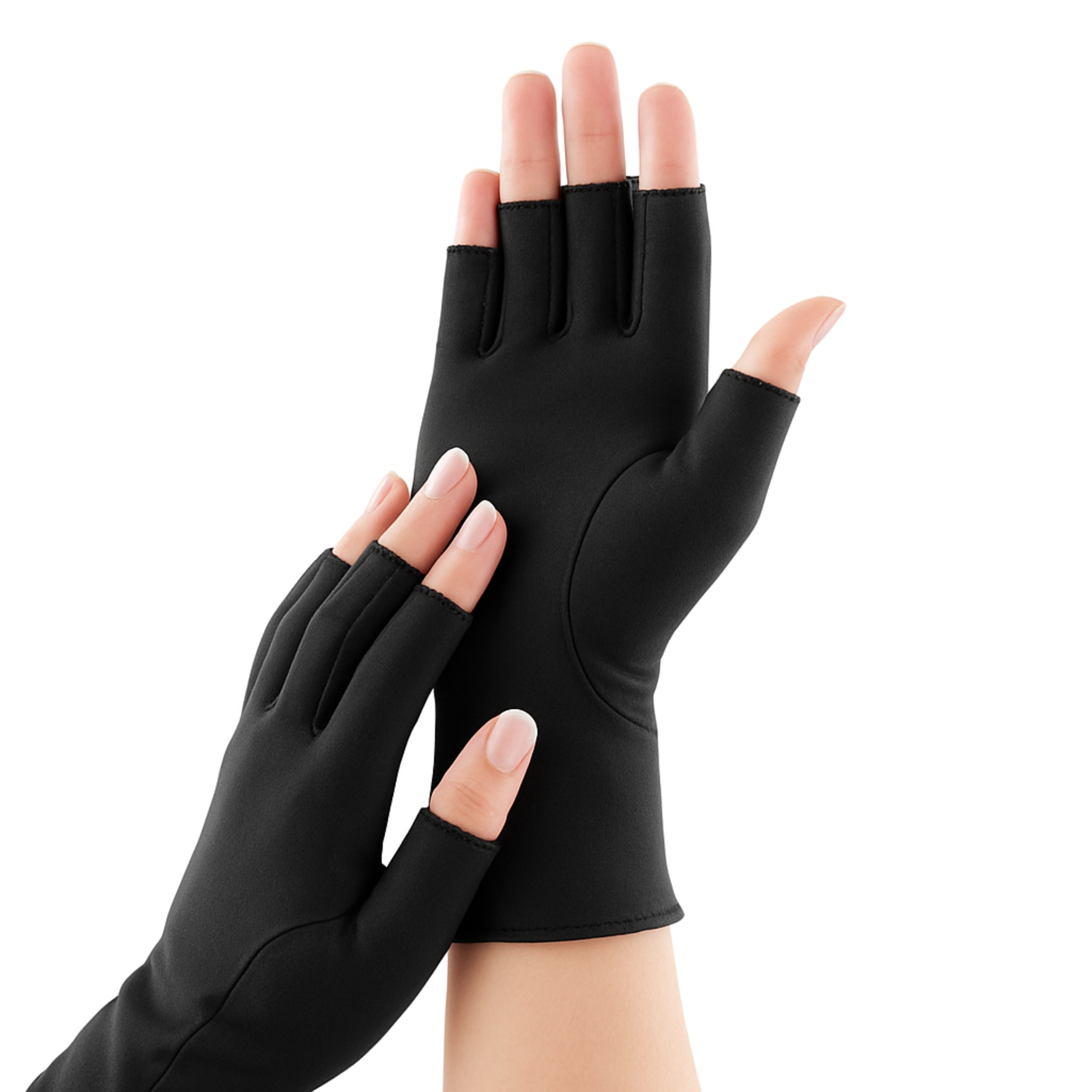
- This item: Carpal Tunnel Syndrome Wrist Splint Brace(£13.99inc VAT)
- RevitaFit™ Carpal Tunnel Syndrome Gloves(£10.99inc VAT)
What you might be struggling with day to day
Waking in the night with pins and needles in your hand. Shaking your wrist out at your desk. Dropping things because your grip suddenly feels weak or clumsy. When this starts to interfere with work, sleep, or simple everyday tasks, it’s natural to feel concerned and want clear answers. It can be frustrating when your hand lets you down during movements that used to feel effortless.
These symptoms usually point to pressure or irritation around the median nerve. That nerve runs through the front of your wrist and supplies feeling to your thumb, index finger, middle finger, and part of your ring finger. When it gets squeezed in a tight space at the wrist, the signals it carries can be disrupted. The result is tingling, numbness, pain, or weakness in those specific fingers and across the palm.
The pattern isn’t random. The median nerve follows a particular route through a narrow tunnel formed by bone and strong tissue at the wrist, and any extra pressure there shows up in a highly predictable set of fingers. That’s why you might recognise the symptoms even before you know what to call them.
If this keeps going, everyday tasks start to feel harder than they should — from holding a cup to typing at a keyboard. Many people at this stage begin looking for a firm wrist splint to wear at night and during the day. So it’s worth spotting the common signs early.
You may notice:
- Numbness or tingling in the thumb, index finger, and middle finger, sometimes spreading into the ring finger, so the hand feels “dead” or as if it’s gone to sleep.
- Pain or burning in the wrist and palm that can travel up into the forearm, especially on the palm side.
- Symptoms that wake you at night, particularly in the early hours, then ease a little when you sit up and gently move or shake your hand.
- Clumsiness with your hand — for example, struggling to fasten buttons or hold a cup as securely as usual because your fingers don’t quite respond the way you expect.
- Aching and stiffness around the wrist during or after repetitive tasks like typing, sewing, or using hand tools, where your wrist is bent and your hand is gripping for long periods.
- Flare-ups of pain and swelling where the wrist suddenly feels worse, often linked to conditions such as sprains (ligament injuries), strains (muscle or tendon injuries), tendonitis, gout, or arthritis.
The natural concern is whether this will keep getting worse or start to affect your work more. Many people in this situation improve with simple measures such as splinting, activity changes, and targeted advice from a clinician. The sooner you reduce the strain on an irritated wrist, the better your chance of easing symptoms and protecting how well your hand works.
But first, it helps to understand what’s actually happening inside your wrist.
What is happening inside your wrist
On the palm side of your wrist there’s a narrow passage called the carpal tunnel. It’s formed by the small wrist bones at the bottom and sides, and a strong band of tissue across the top.
Running through this tunnel are:
- The median nerve — the main nerve to the thumb-side fingers and the small muscles at the base of your thumb that help you pinch and grip.
- Nine flexor tendons — the cords that connect the muscles in your forearm to your fingers and thumb, allowing you to grip and bend your fingers.
In a healthy wrist, there’s just enough room for all of these structures to glide freely as you open and close your hand and move your wrist. Problems start when that space becomes more cramped, leaving less room for the median nerve and flexor tendons to move.
This can happen when:
- The tissues around the tendons become inflamed and swollen from repeated use and friction, so they take up more space in the tunnel.
- Fluid builds up in the area, for example during pregnancy or with certain medical conditions that cause the body to hold on to more fluid.
- The tunnel is naturally quite narrow — something that can run in families — so there wasn’t much spare space to begin with.
- Arthritis, previous fractures, or age-related changes alter the shape of the small wrist bones that form the tunnel walls, or thicken the strong band of tissue over the top.
As the space inside the tunnel reduces, pressure on the median nerve increases, and the tendons have less room to glide. Nerves are sensitive to pressure. That extra pressure disrupts normal nerve signals, leading to tingling, numbness, pain, or weakness in the thumb-side fingers. This is the pattern behind Carpal Tunnel Syndrome, often shortened to CTS.
These symptoms are often most noticeable at night, when your wrist tends to bend and stay in one position for a long time. That bent position narrows the tunnel and keeps the nerve under pressure — which is why symptoms so often wake you in the early hours. They can also flare up during or after repetitive hand use, when the tendons and surrounding tissues swell and rub more in the confined space. Think of what happens when you spend a long day typing with your wrist resting on the desk edge, or driving with your hands held in a curled grip. Each of those positions narrows the tunnel just a little more, and over hours the pressure builds.
Other wrist and hand problems — sprains, strains, tendonitis, gout, and arthritis — don’t necessarily involve the median nerve, but they affect the same area and can cause similar pain, swelling, and stiffness. In those cases, the ligaments, tendons, or small joints around the wrist become irritated, and certain positions or loads make it worse.
Why a wrist splint is often recommended
Now we can see why a wrist splint is such a logical step.
Here’s the key detail: bending your wrist changes the shape of the carpal tunnel. If you bend your wrist forwards or backwards, you make the tunnel smaller — a bit like kinking a narrow tube. That raises the pressure on the median nerve. Hold the wrist straight, and the tunnel stays as open as it can be.
What does “straight” actually mean? Stand with your arm relaxed at your side. Your hand, wrist, and forearm line up naturally. That straight line is the neutral position — the position where the carpal tunnel is at its widest and the median nerve has the most room. This is the position a neutral wrist splint is designed to hold.
At night, this matters a lot. Most people naturally curl their hands while sleeping, and if that position is held for hours, the nerve stays under pressure the whole time. A neutral-position wrist splint stops the wrist from dropping into those cramped positions. It holds your wrist in a straight line with your forearm, giving the median nerve more room and a proper break while you rest.
Firm support is important here. A splint with built-in rigid stays holds the wrist straight reliably during sleep and long tasks, which is why clinicians often recommend a firm, neutral-position splint for Carpal Tunnel Syndrome when symptoms are still intermittent.
For other wrist conditions, the principle is similar but the tissues involved are slightly different. A sprain is a ligament injury; a strain is a muscle or tendon injury; tendonitis is an irritated tendon; and arthritis is inflammation in the small joints. In all of these, protecting the joint, limiting painful movement, and giving the tissues time to settle are key parts of the commonly used P.R.I.C.E. approach:
- Protection — shielding the area from further knocks and limiting movements that stretch or twist the wrist.
- Rest — reducing the amount of force you put through the wrist so sore tissues aren’t stressed all day. This usually means doing less with the sore wrist, not complete immobility.
- Ice — using cold packs to help ease pain and swelling in the early stages.
- Compression — gentle, even pressure around the area to help manage swelling.
- Elevation — keeping the hand raised when appropriate to help fluid drain away.
A firm wrist splint mainly helps with the Protection, Rest, and Compression parts of that plan, while you follow your clinician’s advice on movement and exercise.
In short, there’s a clear reason why this type of product makes sense: it keeps the wrist in the position that causes the least pressure and irritation, and it does so reliably enough to make a difference overnight and during daily tasks.
In-depth look at Carpal Tunnel Syndrome
Carpal Tunnel Syndrome is one of the most common reasons adults develop numbness, tingling, and pain in the hand, particularly in the thumb, index finger, middle finger, and part of the ring finger. It happens when the median nerve is squeezed inside the carpal tunnel, and it tends to follow a fairly predictable pattern.
How it usually progresses
In the early stages, symptoms are often intermittent. You might notice pins and needles or numbness at night, especially in the early hours, and find that shaking your hand or changing position eases it quickly. At this point, the nerve is mainly irritated at certain times and recovers well between episodes.
If the pressure isn’t reduced, symptoms tend to become more frequent. You may notice tingling or a “fuzzy” feeling during the day, especially after tasks that keep the wrist bent — keyboard work, holding a steering wheel, or using hand tools. The nerve is spending more of its day under pressure and recovers more slowly.
In more advanced cases, the numbness can become more constant, the muscle at the base of the thumb can become weaker or visibly thinner, and fine tasks like doing up buttons or using cutlery feel clumsy. This is why it’s worth acting early, before the nerve has been under high pressure for a long time.
How it is usually diagnosed
A clinician will usually start by asking which fingers are affected, when symptoms are worst, and what makes them better. They may test light touch and sensation in your fingers, check the strength at the base of your thumb, and gently bend your wrist to see if it brings on tingling. If the picture is unclear, or surgery is being considered, nerve conduction tests may be arranged to measure how quickly signals travel along the nerve.
Mild, moderate, and more severe CTS
Clinicians sometimes group Carpal Tunnel Syndrome into mild, moderate, and more severe forms. In practical terms:
- Mild usually means intermittent pins and needles or numbness at night or after certain tasks, with normal hand strength and quick recovery.
- Moderate usually means symptoms are more frequent, may appear during the day, and can leave a small area of constant numbness in the thumb-side fingers.
- More severe usually means numbness is present most of the time, the thumb muscle may look thinner, and grip or pinch strength is clearly reduced.
Neutral-position wrist splints and activity changes tend to be most effective in the mild to moderate stages, when the nerve can still recover between episodes. In more severe cases, splinting can still add comfort and protect the wrist, but specialist assessment is important.
Who is more at risk and why
Certain factors make the carpal tunnel more vulnerable:
- Repetitive hand and wrist movements, especially when the wrist is held bent, can irritate the tendons and cause swelling inside the tunnel.
- Health conditions that affect nerves or tissues — such as diabetes, rheumatoid arthritis, and an underactive thyroid — can make nerves more sensitive to pressure or increase fluid retention.
- Hormonal changes and fluid retention during pregnancy can temporarily increase pressure in the tunnel. Symptoms often settle after birth, but they can be very uncomfortable while they last.
- Some people are simply born with a narrower tunnel, which means there’s less spare room when anything swells.
- Women are affected more often than men, and the condition becomes more common with age.
Having one of these risk factors doesn’t guarantee you’ll develop Carpal Tunnel Syndrome, but it can make symptoms more likely.
How splints fit alongside other care
Treatment depends on how severe the symptoms are. For mild to moderate Carpal Tunnel Syndrome, non-surgical options are usually tried first. These include changing how you use your hands, taking regular breaks, adjusting your keyboard or mouse position, and doing targeted exercises with a physiotherapist. Anti-inflammatory medicines and, in some cases, steroid injections (a stronger anti-inflammatory treatment given by injection) may also be discussed with a clinician.
A neutral-position wrist splint is one of the most commonly recommended first steps, particularly for night-time use. Its job is to hold the wrist straight so the tunnel stays as open as possible while you sleep. More advanced or stubborn cases may eventually be treated with a procedure to release the tight band across the top of the tunnel, but the aim of early splinting is to get symptoms under control and, where possible, avoid surgery altogether.
How the NuovaHealth Carpal Tunnel Wrist Splint Brace is designed to help
The NuovaHealth Carpal Tunnel Wrist Splint Brace is a firm, neutral-position splint. Its main job is to hold your wrist in a straight line with your forearm, so the carpal tunnel stays as open as possible and irritated tissues get more room to settle. It’s designed around what clinicians usually look for in a wrist splint: firm support where it matters, comfort for long wear, and free fingers so you can still get on with your day.
Let’s be clear about what it can and cannot do. This brace is a supportive aid – it reduces strain and protects the wrist, but it’s not a treatment that cures an underlying condition on its own. It also isn’t a substitute for a professional diagnosis. If you’re not sure what’s causing your symptoms, see a clinician first.
Firm support where it matters
Inside the main body of the brace are three aluminium support strips. These are shaped to follow the wrist, which helps them sit comfortably and stay in the right position throughout the night and during daily tasks.
One wider strip runs along the palm side of your wrist and hand. It supports the base of your palm and stops the wrist from bending up or down. This is the strip that counters night-time wrist curling – the position that narrows the tunnel and presses on the median nerve. By holding your wrist in that straight line, it gives the nerve more room during the hours when symptoms usually flare up. It also reduces the constant pull on the flexor tendons that would otherwise add to irritation over a full night.
The other two strips are built into the sides of the brace along the forearm and wrist. They control side-to-side movement and twisting at the wrist joint. That’s what can reduce the sharp twinges some people feel when turning a key, opening a door handle, or twisting their hand to pick something up. When those side-to-side forces are limited, the ligaments and tendons at the edges of the wrist aren’t stretched or compressed as suddenly. For someone with a sprain, this can be the difference between a ligament being painfully pulled and a joint that feels protected.
These strips run the full length of the brace, creating a stable frame around your wrist and palm. Because they’re built into the fabric rather than being removable, they stay exactly where they’re needed every time you put the brace on – no need to check whether a stay has shifted. This is the key difference between a firm splint like this and a soft elastic wrap, which can let your wrist sag back into a bent position during sleep or long tasks.
Anatomically shaped for left and right hands
The brace is shaped specifically for the left or right wrist. That matters more than it might sound. Your palm and wrist aren’t perfectly symmetrical, so a brace that follows the natural curves of the side you’re wearing it on sits more snugly, stays in place, and keeps the metal strips aligned with the structures they’re meant to support.
A brace that’s too generic can twist or slide as you move, which means the support ends up in the wrong place. This left/right shaping helps keep your wrist straight, limits the bending and twisting that irritate the median nerve and wrist tissues, and reduces strain on ligaments, tendons, and the small joints in the wrist. The better the fit, the less you have to think about adjusting it – and the more likely you are to actually wear it when it counts.
Secure, adjustable fit for adult wrists
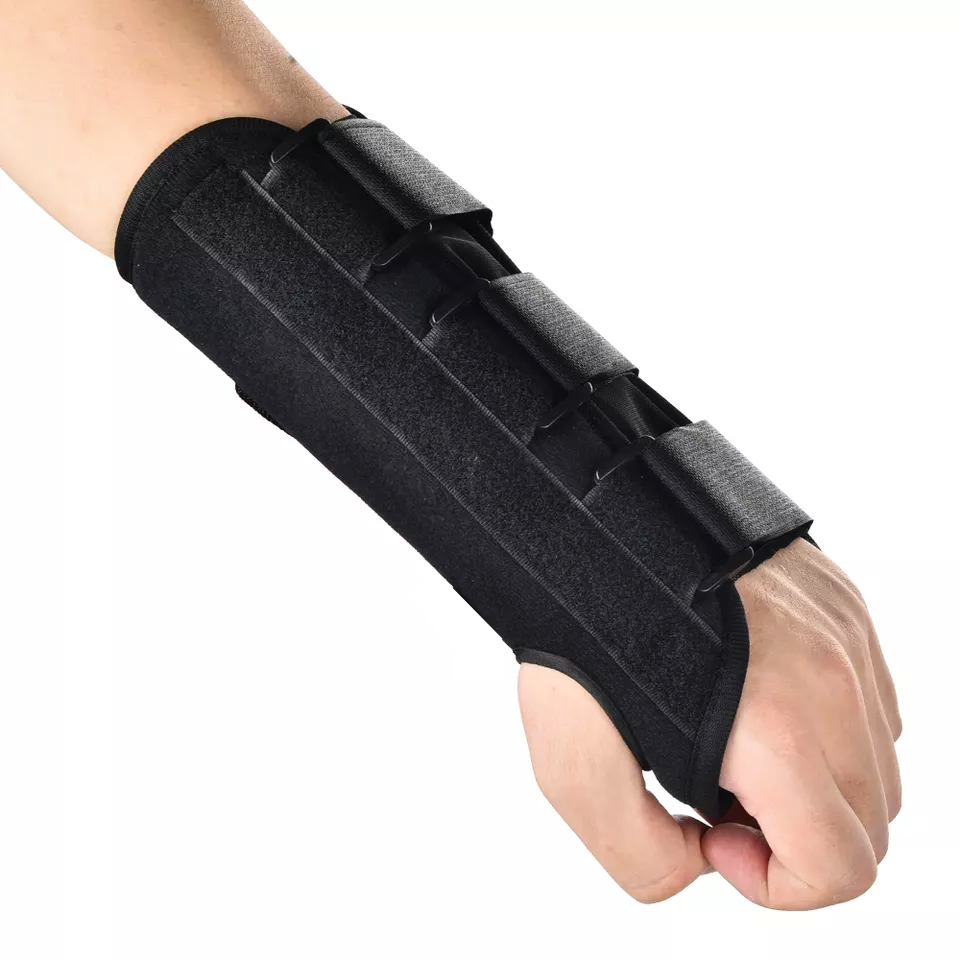
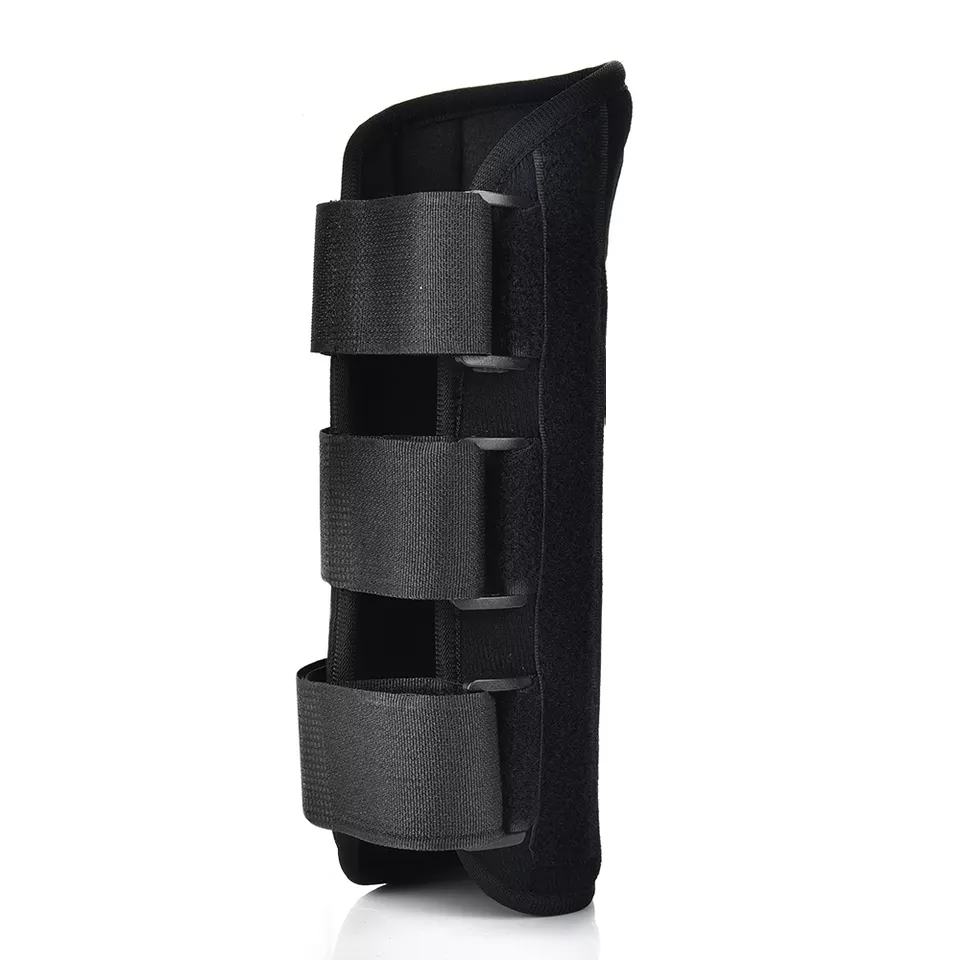
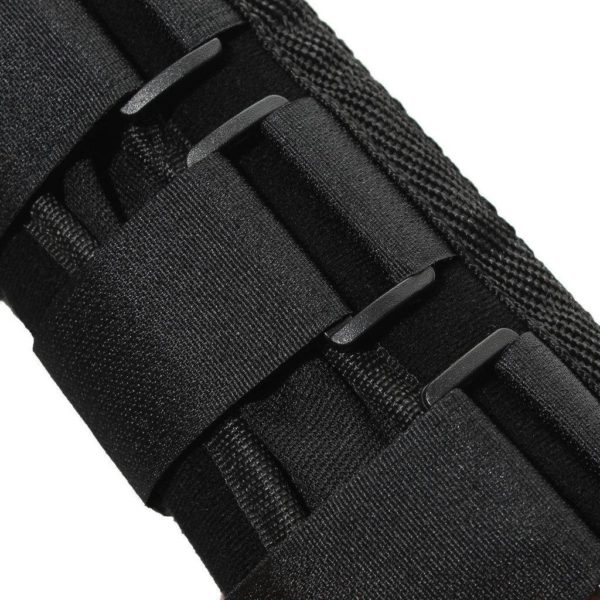
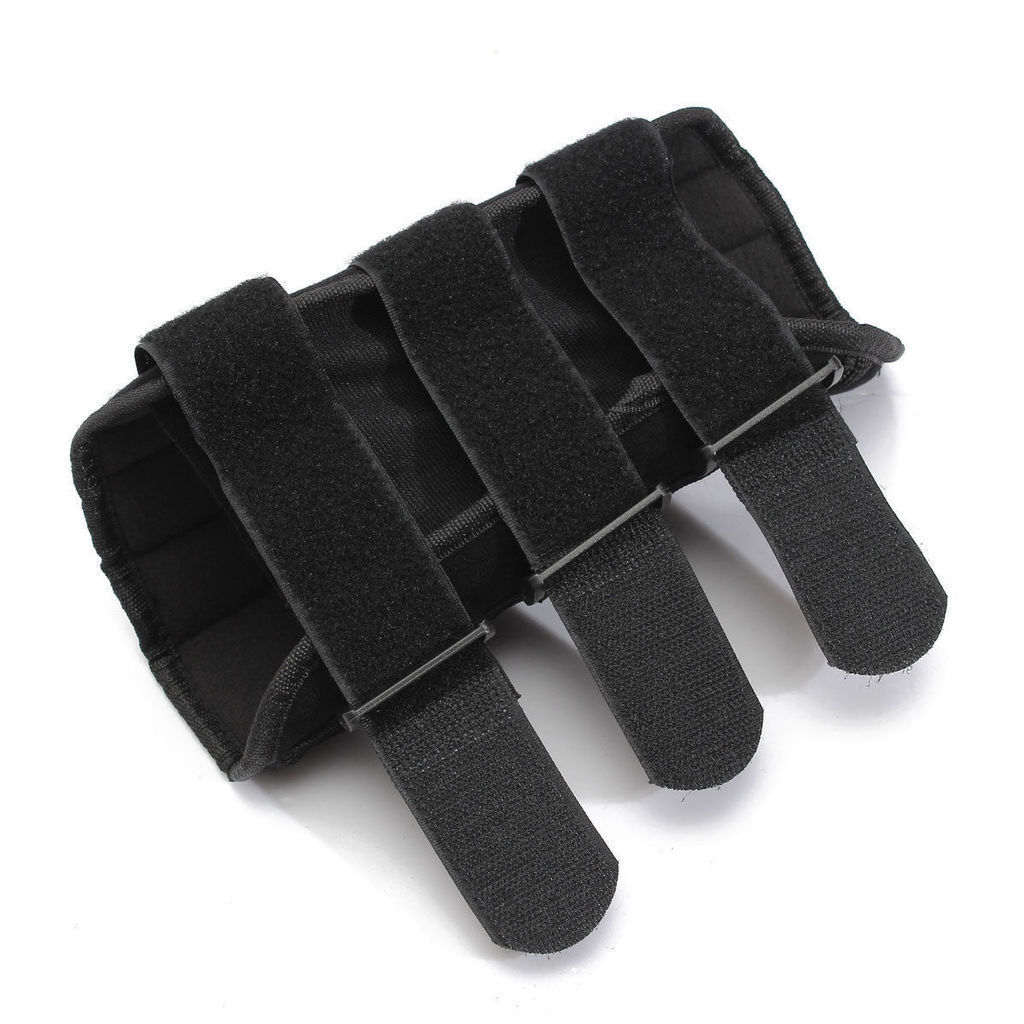
Support only works if the brace fits properly. The NuovaHealth brace uses three adjustable straps with buckles on the top side of your forearm – the side opposite your palm. When you fasten them, they pull the two sides of the brace together over the built-in strips, creating a close, secure fit that hugs the wrist.
It’s available in Small, Medium, and Large to suit a range of wrist and hand sizes. To choose your size, measure around the broadest part of your hand and wrist, including the base of your palm, and refer to the size guidance. If your measurement is near the upper end of a size range and your wrist is broader, the larger size is often more comfortable, as it helps avoid any pinching at the edges.
Once fastened, the brace stays put as you move your arm during the day. That matters because if the brace doesn’t slip, your wrist is more likely to remain in the straight position you’re aiming for, especially overnight. The fit should feel firm and secure, but not so tight that it causes discomfort, tingling, or changes in the colour of your fingers. A simple guide: you should be able to slip a fingertip under each strap without pain or pressure.
Designed for longer wear: comfort, breathability, and free fingers
A splint only helps if you can tolerate wearing it at the times it’s most needed – overnight, and during the tasks that tend to bring your symptoms on. The NuovaHealth brace is built with that in mind.
The inner surface is softly padded, so it feels gentle against your skin and reduces pressure points without adding too much bulk under sleeves. The main body includes ventilation holes to allow air to circulate and reduce heat build-up, particularly along the sides and back where heat tends to collect. Edges are finished with a soft trim and rounded off to reduce the risk of digging in or rubbing. Seams are kept smooth and positioned away from common pressure points around the base of the thumb and the wrist crease.
You can wear the brace directly against your skin, or over a thin sleeve on your forearm and hand if you prefer an extra layer. NuovaHealth also offers separate sleeves designed to be worn under supports like this for added comfort.
Importantly, the brace supports your palm and wrist but leaves your thumb and fingers free up to the knuckles. That means you can still type, use a mouse, hold light objects like cups and pens, and carry out gentle daily tasks such as dressing, eating, or light household activities. You get firm support around the wrist without making your whole hand stiff. For many people, that balance allows them to keep working at a keyboard or doing lighter tasks while limiting the wrist movements that tend to bring symptoms on.
Versatile support across common wrist and hand conditions
Although Carpal Tunnel Syndrome is the main focus of this brace, clinicians also use firm wrist splints like this one to support the joint when ligaments, tendons, or the small joints around the wrist are healing. The brace helps by:
- Shielding the area from sudden movements and knocks, reducing strain on healing ligaments.
- Limiting painful ranges of movement at the wrist, such as strong twisting when you turn a tap or lift something heavy with the affected hand.
- Providing gentle compression to help manage swelling in the soft tissues around the wrist joint.
- Supporting the wrist while you follow the P.R.I.C.E. principles and any exercise or rehabilitation plan you’ve been given.
The main aim in these conditions is to support the wrist joint and limit painful movement while it heals, rather than specifically reducing pressure in the carpal tunnel. For longer-term conditions such as arthritis, many people choose to wear this type of brace during tasks that put more strain on the wrist – heavier lifting, stronger gripping, or flare-ups – rather than all the time.
Built to last and simple to care for
The brace is made from durable, high-quality materials and is designed to withstand regular daily use, including night-time wear, without losing its shape or support. The fabric and construction are chosen to cope with repeated fastening and unfastening, which matters if you use it both at night and during the day.
You can keep it fresh and hygienic by washing it according to the care instructions provided, and allowing it to dry thoroughly before wearing it again. This helps maintain both comfort and the integrity of the materials. With regular care, it keeps its shape and continues to hold your wrist in the intended straight position over time.
How to use your brace and what to expect
How you use the brace is just as important as the brace itself. Once you’ve chosen the correct hand and size, the next step is to fit it properly and decide when it will help you most.
When to wear the brace
For Carpal Tunnel Syndrome, night-time use is often the most important. This is because the brace stops your wrist from collapsing into a bent position while you sleep – the position that narrows the tunnel and keeps pressure on the median nerve. Many people find that wearing a splint at night reduces the numbness and tingling that would otherwise wake them in the early hours. For some, this simple change at night makes the biggest difference to how the hand feels the next morning.
You may also choose to wear the brace for parts of the day, especially during tasks that you know tend to bring your symptoms on – longer periods at a keyboard, assembly tasks, certain manual jobs, or holding a controller with the wrist bent back. Keeping your wrist closer to straight during those tasks can reduce irritation in the tissues at the front of the wrist. The more often your wrist spends time in a straight line, the less time the median nerve is being squeezed and the more opportunity the tendons have to glide without friction.
For other wrist conditions such as sprains, strains, tendonitis, gout, or arthritis, wearing the brace during painful phases or when you’re using your hands more – for example, lifting and carrying – can offer useful protection and rest. At times when your symptoms are calmer, your clinician may advise periods out of the brace to gently move the wrist within comfortable limits. Joints and tendons need some movement to stay supple, so this balance between support and gentle motion helps prevent stiffness. The brace isn’t something you need to wear all the time; it’s a tool you use when your wrist needs more protection.
How to put the brace on
- Choose the left or right brace, depending on which wrist you want to support.
- Slide your hand into the brace so that the wider metal strip sits under the base of your palm and the brace wraps around your wrist and lower forearm.
- Check that your thumb and fingers are free to the knuckles and that your wrist feels naturally straight, in line with your forearm rather than bent forwards or backwards.
- Fasten the three straps across the top of your forearm, starting with the strap closest to your wrist and working your way up.
- Adjust each strap so the brace feels firm and secure, but not so tight that it causes discomfort, tingling, or colour changes in your fingers.
If you’re unsure at first, it can help to fit the brace in front of a mirror so you can see that your hand and forearm form a fairly straight line from elbow to knuckles.
A common early mistake is fastening the straps too tightly. Firm is enough. You may find you prefer a slightly firmer setting at night, when the brace mainly needs to stop your wrist curling, and a slightly looser setting during the day if you’re using your hands for desk-based work. The right tension is one that holds your wrist steady without creating any pressure points, tingling, or changes in finger colour. If you feel the brace shifting as you move your arm, it’s either too loose or you haven’t pressed your hand fully back into the palm pocket.
Wear-time and comfort checks
The brace is designed to be comfortable for extended wear, including overnight. Even so, it’s worth keeping an eye on how your skin and hand feel.
- If you’re wearing it during the day, give yourself short breaks to move your wrist gently within a comfortable range, unless your clinician has advised otherwise. This helps the joint stay supple, supports circulation, and reduces stiffness without over-straining sore tissues.
- Check your skin for any areas of rubbing or redness when you first start using the brace. Adjusting strap tension or wearing a thin sleeve underneath can often improve comfort.
- If you notice new or unusual numbness, tingling, coldness, or colour change in your hand or fingers that doesn’t settle quickly after adjusting the straps, remove the brace and seek advice. This isn’t something to push through. It usually means the brace is too tight or is pressing on a nerve or blood vessel in a way that isn’t right for you.
Activities with and without the brace
You can usually wear the brace for sleeping, desk-based work, light everyday tasks such as dressing and eating, carrying lighter shopping, and steady walking or other light exercise that doesn’t rely on strong or rapid wrist movements. Because your fingers are free, you can still hold a pen, use your phone, or stir a cup of tea. What you’re limiting is the bending and twisting of the wrist itself, not your hand’s ability to do fine work.
Some activities need extra care. Heavy lifting or carrying, high-impact or contact sports, and tasks that absolutely require full, free wrist movement all need careful consideration. In these situations, ask a clinician whether you should wear the brace for these activities, modify them, or avoid them until your wrist is more settled. For example, carrying a heavy suitcase with the affected arm may put more strain on the wrist than the brace can cope with, and the handle may press against the metal strips.
Driving needs particular thought. You need to be able to grip and turn the steering wheel and operate controls quickly and firmly, and because the brace limits bending and twisting at the wrist, it may affect how easily you can do that. It’s your responsibility to make sure you’re in full control of your vehicle. If in doubt, first check the impact on your control in a safe, off-road setting and discuss with a clinician if you’re unsure. Some clinicians advise avoiding driving in the brace until you’ve been assessed.
What to expect over time
Some people notice an improvement in night-time symptoms within a few nights, simply because the wrist is no longer being held in a bent position for hours. For others, the change is more gradual over a few weeks as the irritated tissues have a chance to settle.
A reasonable sign of progress is waking less often with numbness or tingling, or noticing that your hand feels steadier during tasks that used to trigger symptoms. You may also find that the pain that used to shoot up your forearm when you turned a key or opened a jar isn’t as sharp, because the brace is stopping the wrist from moving into the positions that caused it. If after two to three weeks of consistent night-time and task-related use you see no difference – or your symptoms are getting worse – that’s a prompt to seek professional advice rather than continuing to trial the brace on your own.
It’s also worth understanding how wear patterns tend to evolve. Many people start by wearing the brace every night and during the tasks that trigger their symptoms, then gradually reduce use as symptoms settle. You may find you only need it during flare-ups, or only at night, rather than throughout the day. The goal is to let you return to your normal activities with less discomfort – not to keep you in the brace indefinitely. If you’re unsure how to taper use, a clinician can advise you.
Who this brace is for, and when to seek further advice
This brace is primarily designed for adults who need firm, reliable support for Carpal Tunnel Syndrome, particularly when symptoms are mild to moderate. It can also be appropriate, on the advice of a clinician, for wrist and hand problems such as sprains, strains, tendonitis, gout affecting the wrist or hand, and arthritis in and around the wrist. It’s especially suited to situations where pressure on the median nerve in the carpal tunnel is a key part of the problem, but the same stabilising and protective features can also be helpful when the main issue is inflamed ligaments, tendons, or joints. Once a clinician has confirmed that a wrist fracture has healed enough, this type of brace may also be used to support the wrist during the later stages of recovery.
This brace may be particularly useful if:
- Your symptoms come and go, are worse at night or after specific tasks, and you don’t have constant numbness or severe loss of strength.
- You’re waiting for assessment or treatment and want extra support in the meantime.
- You’ve already been advised by a clinician to use a wrist splint and are looking for a comfortable, anatomically shaped option with firm metal supports.
It’s also important to know when this brace isn’t the right answer, or when you should get professional guidance first. You should speak to a general practitioner (GP), physiotherapist, or other appropriate clinician if:
- You’ve had a recent significant injury to the wrist or hand, especially if there’s marked swelling or deformity, severe pain, or you can’t move the wrist or fingers.
- Your symptoms are rapidly worsening, or you develop new, unexplained symptoms such as constant numbness, new weakness, or severe pain that doesn’t settle with rest.
- You’ve been diagnosed with a condition that affects circulation or nerve health and you’re unsure whether compression or splinting is appropriate for you.
- You’re unsure whether your symptoms are due to Carpal Tunnel Syndrome or something else.
You should also pause use of the brace and arrange an assessment if you notice any of the following: new or worsening pain that doesn’t improve with adjustment or short breaks from the brace, persistent changes in skin colour, temperature, or sensation in your hand or fingers, or swelling that seems to be getting worse rather than better.
This brace doesn’t treat or prevent blood clots, and it shouldn’t be relied upon to improve circulation in the hand or arm. If you have any history of circulatory problems or are concerned about blood flow, discuss this with a clinician before using a compression-style support.
A brace like this is a supportive tool, not a cure in itself. It isn’t a way to diagnose your condition, and it works best alongside a broader plan that may include activity changes, exercises, and other treatments recommended by your clinician. If you already have constant numbness or clear loss of strength, it’s important to see a specialist even if you also try a splint.
Frequently asked questions
How quickly will I notice a difference?
Some people notice an improvement in night-time symptoms within a few nights. For others it develops over a few weeks. A fuller explanation of what to expect, and when to review your progress, is given in the “What to expect over time” section above.
Can I drive while wearing the brace?
Driving needs full control of the wheel and controls. You should check how the brace affects your control in a safe, off-road setting first, and discuss with a clinician if you’re unsure. Some clinicians advise not driving in the brace until you’ve been assessed. Full guidance is in the “Activities with and without the brace” section above.
Can I wear it during the day at work?
Yes, in most cases, particularly for desk-based work and lighter tasks, because your fingers remain free. If your job involves heavy or forceful wrist movements, ask your clinician for individual advice. More detail is in the “When to wear the brace” section above.
Can I wear it while typing or using a mouse?
Yes, the brace leaves your fingers and thumb free, so light typing is possible. However, it may feel slightly restrictive at first, especially for fast or long sessions. Many people prefer to wear it at night and during breaks, rather than for the whole working day, unless their symptoms are worse with desk work. The main point is to keep your wrist from dropping into a bent position while you work.
Can I wear it while sleeping on my side?
Yes. The brace is designed to stay in place during the night. Some side sleepers find it more comfortable to rest the arm on a pillow rather than directly under their body weight. If it presses against the mattress, you can adjust your arm position until it feels comfortable. The support shouldn’t dig into your skin or restrict your breathing – it’s only on your wrist and forearm.
Will it fit under a jacket or sweater?
The brace is relatively low-profile, but the metal strips do add some bulk. It will usually fit under a loose sleeve, but a tight-fitting sleeve may bunch around the brace. If that’s an issue, you can wear it over the sleeve or reserve it for times when you don’t need tight-fitting clothing over the wrist.
How is this different from a compression glove?
A compression glove applies gentle even pressure over the whole hand, which can help with mild swelling and general comfort. However, it doesn’t hold the wrist in a fixed straight position. This brace uses rigid stays to keep your wrist straight – that’s the key feature for reducing pressure on the median nerve, especially overnight. For daytime comfort away from the desk, a glove may feel less intrusive, but if the goal is to stop your wrist from bending while you sleep, a splint like this is the more direct option.
Can I use it if my main problem is arthritis in my thumb?
This brace supports the wrist and the base of the palm, but it doesn’t completely stop the thumb joint from moving. If your pain is mostly at the base of the thumb, you may need a brace designed to hold the thumb in place as well. That said, if your activities involve wrist bending that also aggravates thumb arthritis, this brace can still reduce strain on the wrist, which may indirectly help. It isn’t a replacement for a thumb-specific support if your clinician recommends one.
Is this NuovaHealth wrist splint right for you?
If numbness, tingling, or pain in your wrist and hand are holding you back, now is a sensible time to act. The Carpal Tunnel Wrist Splint Brace is designed to hold your wrist in a more comfortable position for the median nerve, protect irritated tissues from repeated strain and sudden movements, and provide support you can wear at night and during the day.
Because it combines firm, built-in metal strips that are shaped to follow the wrist, with left- and right-specific shaping and breathable padding, it offers the type of targeted support that many clinicians look for when they recommend a neutral-position wrist splint. If you recognise your own symptoms in this page, it’s reasonable to trial the brace for a few weeks, using it at night and during the tasks that usually trigger your symptoms, then review how you feel.
NuovaHealth offers a 30-day money-back guarantee on this brace. That gives you the chance to try it properly, during your normal activities, with the reassurance that you’re not committed without testing it first. Choosing the correct hand and size, and following the fitting and wear advice, will help you get the best from it.
If you’re unsure whether it’s right for your situation, speaking with a GP or physiotherapist can help you decide on the best next step.
Disclaimer
The information on this page is general guidance and is not a substitute for individual medical advice, diagnosis, or treatment. Wrist and hand symptoms can have different causes, and it’s important to seek assessment from a GP, physiotherapist, or other appropriate clinician if you’re unsure about your condition, your symptoms are changing, or they aren’t settling as expected. No specific outcome can be guaranteed from using this brace, and it should be used alongside, not instead of, professional care.
1 Review For This Product
Fast & Secure Checkout Through Paypal
Pay with Paypal the secure payment gateway that accepts all credit and debit cards. Paypal is free and secure and no credit or bank information is ever stored or shared with us.
Fast Dispatch
Enjoy your items soon with quick dispatch via Royal Mail. Expect to have your items between 1-3 working days for domestic orders. 7-10 Working days for international orders.
Return Policy – 30 Day Money Back Guarantee
In the unlikely event, you are unhappy with your purchase you can return it within 30 days for a refund. Please contact us via the form on the contact us page to start your return.
To return an item please send it to: Nuova Health UK, 81 Highfield Lane, Waverley, Rotherham, S60 8AL. Please include a note with your order id so we know who to refund. Please retain your postage receipt as proof of postage. All that we ask is that the item is in the original packaging and unused.

by Mark Forster
I’ve been suffering from carpal tunnel pain for a while now but straight away as soon as I started wearing this brace my pain has finally started to ease 🙂